Year
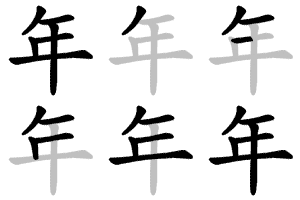
年
Year
Kun-yomi 🇯🇵:
とし (toshi)
(Japanese reading)On-yomi 🇨🇳:
ネン (nen)
(Chinese-derived reading)
Pronunciation rules
- とし (toshi) is the kun-yomi used when the kanji stands alone meaning "year" or "age".
- ネン (nen) is the on-yomi used in compounds like 来年 (らいねん, rainen: next year) or 年金 (ねんきん, nenkin: pension).
- When referring to specific years (like 2000), use the on-yomi reading.
Examples
Kun-yomiNative Japanese Readings
年 が たつ。
Years pass.
Uses kun-yomi とし (toshi) when the kanji stands alone meaning year/age
On-yomiSino-Japanese Readings
二千年 です。
It's the year 2000.
Uses on-yomi ネン (nen) in compound for years
来年 に いきます。
I will go next year.
Uses on-yomi ネン (nen) in compound 来年
年金 を もらいます。
I receive a pension.
Uses on-yomi ネン (nen) in compound 年金
ExceptionIrregular Readings
今年 は あつい です。
This year is hot.
Exception: 今年 reads as ことし (kotoshi) using kun-yomi とし even though it's a compound
毎年 いきます。
I go every year.
Exception: 毎年 reads as みとし (mitoshi) using kun-yomi とし even though it's a compound
Quick facts
- Radical: 禾 (grain)
- Strokes: 6
- Common compounds: 来年 (らいねん, rainen), 年金 (ねんきん, nenkin), 二千年 (にせんねん, nisennen)
- ⚠️ Exceptions:
- 今年 reads as ことし (kotoshi) - uses kun-yomi とし even in compound (not こんねん)
- 毎年 reads as みとし (mitoshi) - uses kun-yomi とし even in compound (not まいねん)
- Standalone: とし (toshi) - year, age
- In most compounds: ねん (nen) - year
Key Words
年 - year, age
二千年 - the year 2000
来年 - next year
年金 - pension
今年 - this year
毎年 - every year