Eye
目
Eye
Kun-yomi 🇯🇵:
め (me)
(Japanese reading)On-yomi 🇨🇳:
モク (moku)
(Chinese-derived reading)
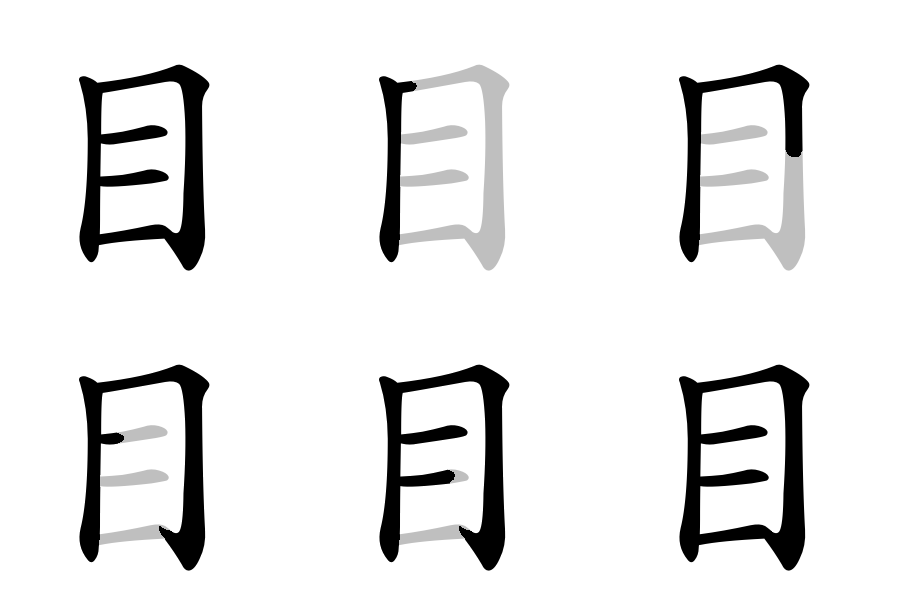
Pronunciation rules
- め (me) is the kun-yomi used when the kanji stands alone meaning "eye".
- モク (moku) is the on-yomi used in compounds like 目的 (もくてき, mokuteki: purpose).
- When used as a suffix for counting days, it reads as め (me) as in 一日目 (いちにちめ, ichinichime: the first day).
Examples
Kun-yomiNative Japanese Readings
目 が きれい です。
The eye is beautiful.
Uses kun-yomi め (me) when the kanji stands alone meaning eye
一日目 です。
It's the first day.
Uses kun-yomi め (me) as a suffix meaning "day"
目薬 を つけます。
I apply eye lotion.
Uses kun-yomi め (me) in compound 目薬
On-yomiSino-Japanese Readings
目的 が あります。
There is a purpose.
Uses on-yomi モク (moku) in compound 目的
Quick facts
- Radical: 目 (itself)
- Strokes: 5
- Common compounds: 目的 (もくてき, mokuteki), 目薬 (めぐすり, megusuri), 一日目 (いちにちめ, ichinichime)
- ⚠️ Reading usage:
- Standalone: め (me) - eye
- In compounds: もく (moku) or め (me)
Key Words
め - eye
いちにちめ - the first day
目薬 - eye lotion
目的 - purpose