Leg / Foot
足
Leg / Foot
Kun-yomi 🇯🇵:
あし (ashi)
(Japanese reading)On-yomi 🇨🇳:
ソク (soku)
(Chinese-derived reading)
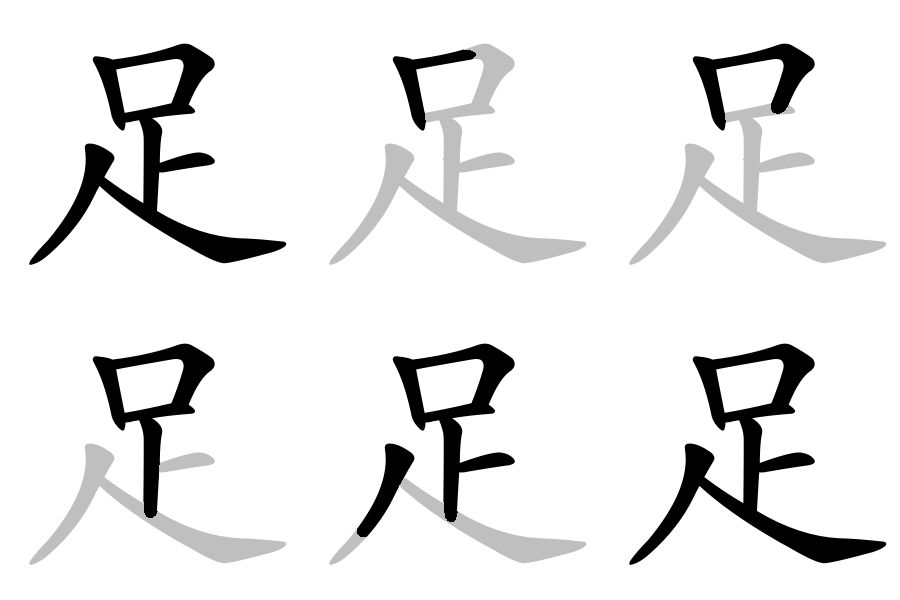
Pronunciation rules
- あし (ashi) is the kun-yomi used when the kanji stands alone meaning "leg" or "foot".
- ソク (soku) is the on-yomi used in compounds like 遠足 (えんそく, ensoku: excursion) and 一足 (いっそく, issoku: a pair).
- As a verb, it reads as たりる (tariru: to be enough).
Examples
Kun-yomiNative Japanese Readings
足 が いたい です。
My leg/foot hurts.
Uses kun-yomi あし (ashi) when the kanji stands alone meaning leg or foot
足りる です。
It's enough.
Uses kun-yomi た (ta) as a verb meaning to be enough
On-yomiSino-Japanese Readings
一足 です。
It's a pair (of shoes).
Uses on-yomi ソク (soku) in compound 一足
遠足 へ いきます。
I go on an excursion.
Uses on-yomi ソク (soku) in compound 遠足
Quick facts
- Radical: 足 (itself)
- Strokes: 7
- Common compounds: 遠足 (えんそく, ensoku), 一足 (いっそく, issoku), 足りる (たりる, tariru)
- ⚠️ Reading usage:
- Standalone: あし (ashi) - leg, foot
- In compounds: そく (soku) - leg, foot
- As verb: たりる (tariru) - to be enough
Key Words
一足 - a pair (of shoes)
足りる - to be enough
遠足 - excursion