Hand
手
Hand
Kun-yomi 🇯🇵:
て (te)
(Japanese reading)On-yomi 🇨🇳:
シュ (shu)
(Chinese-derived reading)
Pronunciation rules
- て (te) is the kun-yomi used when the kanji stands alone meaning "hand".
- シュ (shu) is the on-yomi used in some compounds.
- In many compounds like 手紙 (てがみ, tegami: letter) and 下手 (へた, heta: unskillful), it uses the kun-yomi て (te).
- Exception: In 上手 (じょうず, jouzu: skillful), 手 is read as ず (zu), which is an irregular reading.
Examples
Kun-yomiNative Japanese Readings
手 を あげます。
I raise my hand.
Uses kun-yomi て (te) when the kanji stands alone meaning hand
下手な です。
It's unskillful.
Uses kun-yomi て (te) in compound 下手
手紙 を かきます。
I write a letter.
Uses kun-yomi て (te) in compound 手紙
ExceptionIrregular Readings
上手な です。
It's skillful.
Exception: 手 is read as ず (zu) in 上手, which is neither kun-yomi て (te) nor standard on-yomi シュ (shu)
Quick facts
- Radical: 手 (itself)
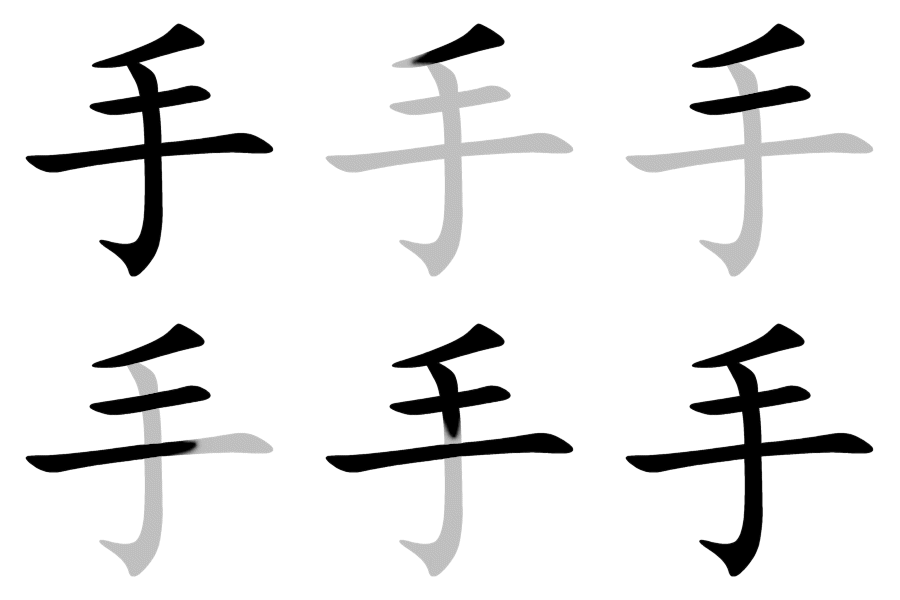
- Strokes: 4
- Common compounds: 手紙 (てがみ, tegami), 上手 (じょうず, jouzu), 下手 (へた, heta)
- ⚠️ Reading usage:
- Standalone: て (te) - hand
- In compounds: しゅ (shu) or て (te)
Key Words
上手な - skillful
下手な - unskillful
手紙 - letter